

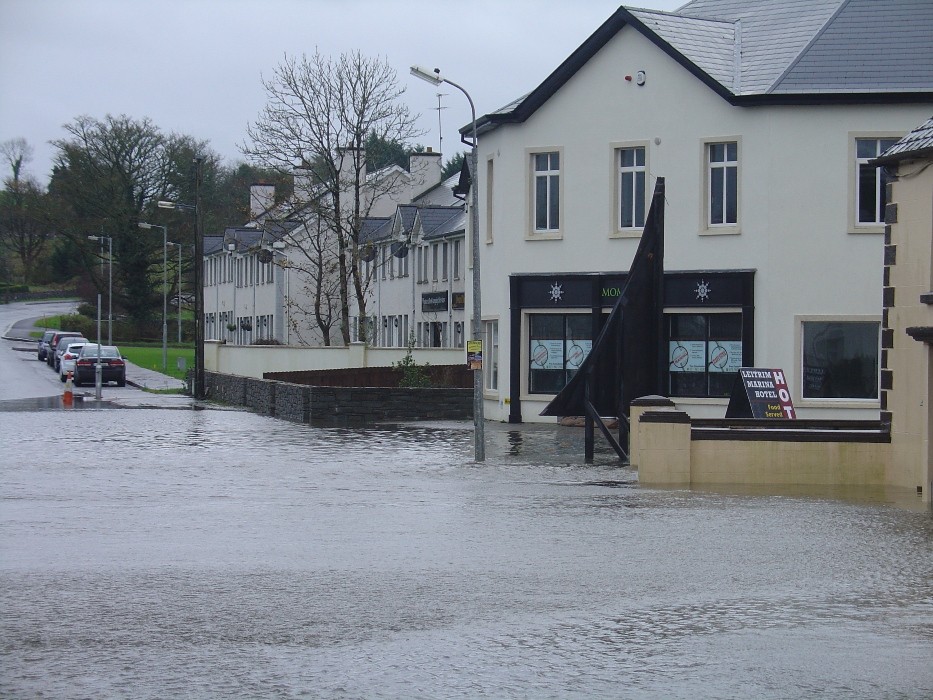
Living and working in Leitrim Village for almost two decades means Momentum has experienced climate disruption at close range. Over the past decade, extreme weather has shifted from something abstract to something deeply personal affecting our homes, workplaces, neighbours, and the rhythms of everyday life.
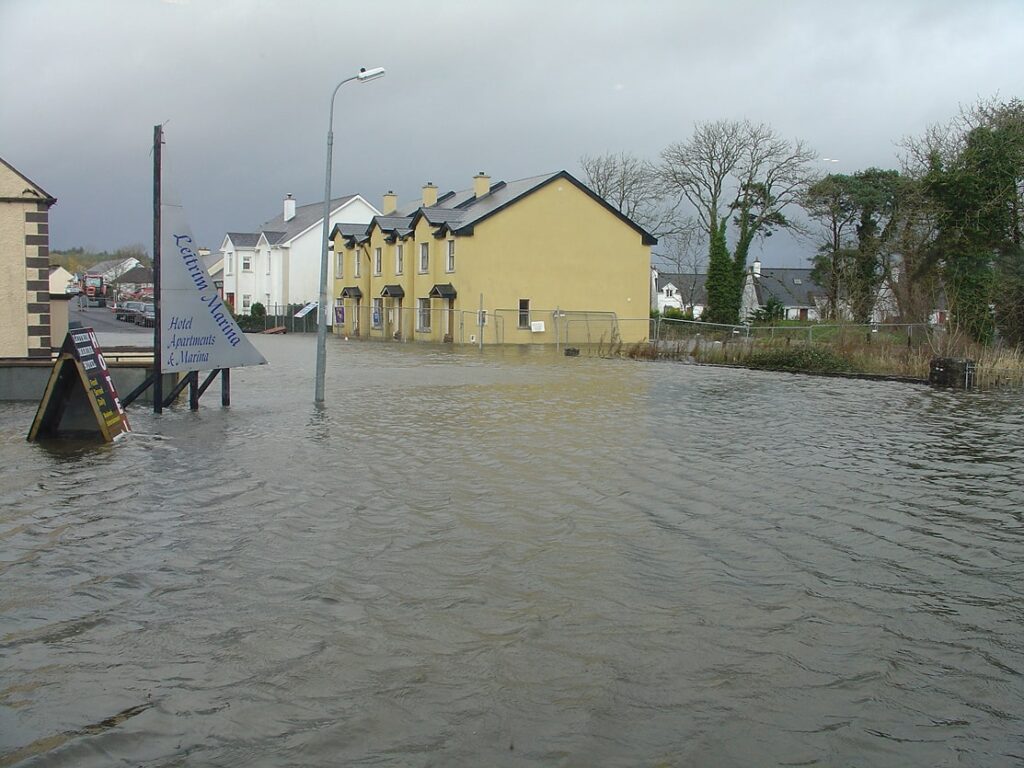
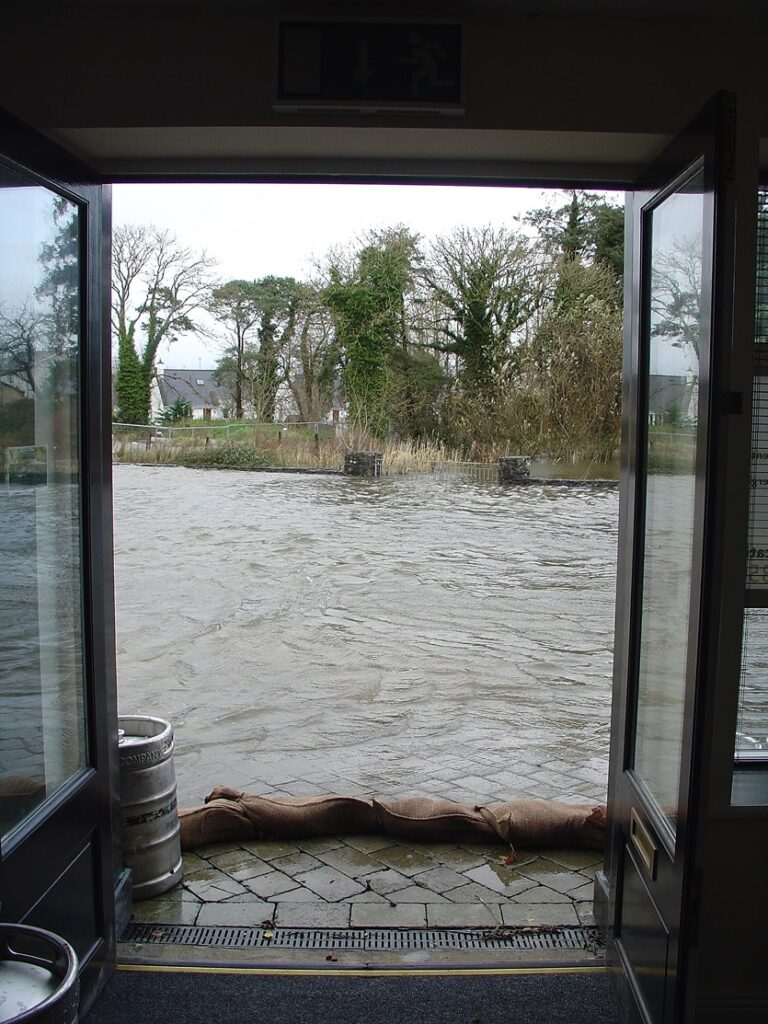
In 2009, the Shannon floods entered our premises, mirroring the damage experienced by many homes and businesses across the area. Our business was interrupted for 4 months. Since then, Leitrim County Council has taken important steps to address climate risk through measures such as flood planning, strategic risk assessment, and long-term development planning aligned with national and EU flood management frameworks.
In 2023, a freak weather event saw a tornado hit our village, narrowly missing our premises, coming in metres away on the other side of the bridge, a reminder that climate-related shocks are becoming more unpredictable and harder to prepare for using traditional approaches. Then, in early 2025, Storm Éowyn caused widespread power outages across Leitrim and the wider region. For many of Momentum employees, electricity was not restored for almost three weeks.
These events brought disruption, stress, and uncertainty. They also revealed something else: the strength of community response when formal systems are stretched.
During the prolonged outages in 2025, local businesses stepped in to support those without power. In Leitrim Village, the Blueway Inn became a focal point for support, serving hot meals to residents who could not cook or heat food at home. This formed part of an ESB-supported initiative, where meals were provided at designated venues for customers in the worst-affected areas of Leitrim and north Roscommon. It was a practical, immediate response that met a basic need, warmth and nourishment at a moment of real vulnerability.
We have seen in these events how resilience is shaped at community level. When systems are under pressure, it is local organisations, educators, businesses, and residents who are often best placed to respond quickly, identify those most in need, and provide practical, human support. Experiences during Storm Éowyn showed the value of community-led action alongside strategic planning, reinforcing the importance of strengthening local capacity as part of wider preparedness efforts.
At the same time, these experiences raise important questions. How do communities move beyond reactive support towards greater preparedness? How can local leaders, educators, and organisations be better equipped to plan ahead rather than respond in crisis mode each time? And how can smaller, rural places like ours access the tools, training, and knowledge needed to meet the scale and frequency of the challenges ahead?
This is where the RISE – Resilient Communities project comes in.
As the Irish partner in RISE, Momentum brings both professional expertise and lived experience. We work daily with communities facing depopulation, economic pressure, climate risk, and service gaps. We understand that resilience is built locally, through people who know their place and their neighbours, community leaders, adult educators, volunteers, and grassroots organisations.
For Momentum, one of the most valuable aspects of RISE is the opportunity to learn alongside other regions that have faced different but equally severe challenges. From flooding in Spain and Italy to wildfires and earthquakes in Turkey, to community-led recovery efforts in Ukraine, the project creates space to share what works, what doesn’t, and what can be adapted across borders. This exchange strengthens local thinking and avoids reinventing the wheel after every crisis.
What excites us most is that RISE recognises the role of people on the ground. This project acknowledges that resilience is not built solely through infrastructure or policy, but through knowledge, relationships, and confidence. The same local leadership that opened doors, shared food, and checked on neighbours during Storm Éowyn is the leadership RISE aims to support, earlier, better prepared, and with stronger tools at hand.
For communities like Leitrim Village, the future will likely bring further disruption. RISE cannot prevent storms or floods but it can offer a way to shift from reacting to planning, from improvising to preparing, and from isolation to shared learning across Europe. For us at Momentum, that makes this project timely, necessary, and deeply relevant.