


Across Europe, wildfires are no longer seen as rare or isolated emergencies. They are becoming a growing and repeated risk for communities, landscapes, public services and local economies. In recent years, extreme heat, drought, changing land conditions and stronger fire weather have increased the pressure on many regions, particularly in southern and central Europe, but also in areas that have not traditionally seen themselves as wildfire-prone.
The scale of the challenge is clear. 2025 was the most destructive wildfire season on record in the EU, with more than 1 million hectares burned across several EU countries. The European Forest Fire Information System, managed by the European Commission’s Joint Research Centre, recorded 1,079,538 hectares burned in the EU in 2025, roughly equivalent to the area of Cyprus.
This is not only an environmental issue. Wildfires affect people, homes, livelihoods, infrastructure, mental wellbeing, local economies and long-term community stability. They can force evacuations, disrupt transport and communications, damage local businesses, threaten water supplies, and leave communities facing difficult recovery decisions long after the flames have been brought under control.
For the RISE – Resilient Communities project, this is exactly why preparedness, education and community-led resilience matter.
Europe is placing greater emphasis on wildfire prevention and preparedness. In March 2026, the European Commission presented a new approach to wildfire risk management, focused on how to better prevent, prepare for, respond to and recover from wildfires. This includes stronger early warning and monitoring tools, better use of Copernicus and the European Forest Fire Information System, and closer work with countries, regions, land managers and civil protection actors.
This shift matters because wildfire resilience cannot begin when smoke is already in the air. Communities need awareness, trusted information, local plans, communication channels and practical recovery thinking before the emergency happens.
The Council of the EU has also encouraged Member States to strengthen wildfire prevention through sustainable land and forest management, improve preparedness through better use of data, risk assessments and early warning systems, and enhance cooperation in wildfire response. It also identifies climate change, land management changes and human activity as key drivers of increasing wildfire risk across Europe.
In simple terms, Europe is recognising that wildfire preparedness is not only about firefighters and emergency aircraft. It is also about what happens at local level: how people understand risk, how communities organise, how information is shared, how vulnerable people are supported, and how recovery is planned.
Emergency services are essential during wildfire events, but they cannot carry the full responsibility for resilience alone. Local communities are often the first to notice changing conditions, the first to share warnings, and the first to support neighbours when disruption begins.
A wildfire can move quickly. Roads may close, mobile networks may become overloaded, electricity may be disrupted, and people may need to make decisions under pressure. In these moments, community knowledge becomes extremely important.
Local people often know:
This is why community preparedness is not a “nice extra”. It is a core part of disaster resilience.
RISE builds resilient communities by bringing educators and local leaders together to deliver clear, practical learning rooted in local needs. The project focuses on simple steps before, during and after a crisis, including clear guidance, short training and low-cost, high-impact ideas so people can anticipate risks, act sooner and recover well.
Wildfire preparedness begins long before an evacuation order, emergency warning or visible fire front. It begins with awareness.
Communities need to understand what wildfire risk looks like in their own context. For some regions, this may mean forests, farmland, dry grassland or rural roads. For others, it may mean communities located near wooded areas, tourist routes, exposed infrastructure or areas where drought has increased fire risk.
Preparedness can include simple but important actions such as:
This is where adult education and community learning have a major role. Not every resident needs to become a disaster expert, but communities benefit when more people understand the basics of risk, communication and recovery.
One of the biggest mistakes in disaster planning is treating recovery as something that begins only after the immediate danger has passed. In reality, recovery is shaped by decisions made much earlier.
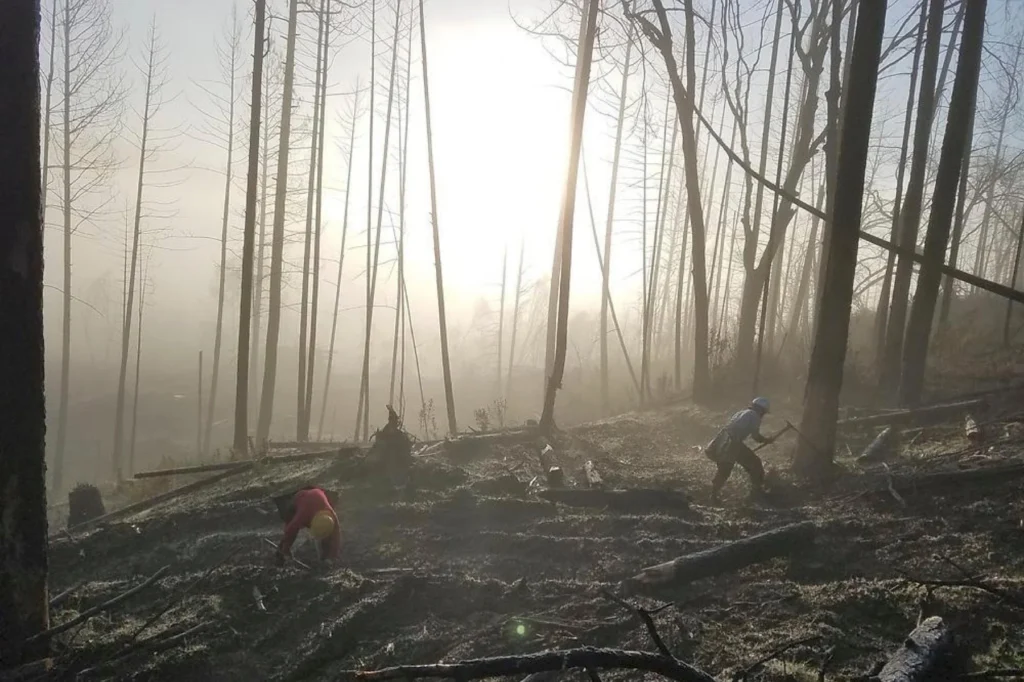
After a wildfire, communities may face damaged homes, destroyed natural areas, disrupted tourism, lost income, trauma, poor air quality, infrastructure repairs and long-term environmental change. The effects can last for months or years.
Recovery can also raise difficult questions:
How do we rebuild safely?
How do we support people emotionally as well as practically?
How do we restore trust and communication?
How do we protect livelihoods?
How do we reduce future risk rather than simply return to the same level of vulnerability?
The RISE approach is important here because it does not treat recovery as a single event. It looks at recovery as a process of learning, adaptation and long-term resilience. The project’s Best Practice Guide reinforces that resilience is not about returning to the past, but about building communities that are stronger, better prepared and ready for the challenges still to come.
Wildfire resilience is not one single action. It is a combination of practical steps, trusted relationships and long-term planning.
At community level, it can include:
Preparedness and awareness
People need to know what wildfire risk means, where to find trusted information, and what actions to take before conditions become dangerous.
Communication and trust
During a crisis, unclear or unreliable information can increase fear and confusion. Communities need communication that is timely, accessible, multilingual where needed, and trusted.
Coordination and local leadership
Local organisations, volunteers, educators, civil society groups and authorities all have a role. Clear coordination helps prevent duplication, confusion and unequal support.
Support for vulnerable groups
Older people, people with disabilities, families without transport, isolated rural households, migrants, tourists and people with limited access to digital information may need tailored support.
Environmental recovery
Wildfires affect ecosystems, soil, water, biodiversity and landscapes. Recovery needs to consider environmental stewardship, not only physical rebuilding.
Learning from real cases
Communities do not have to start from zero. They can learn from what has already worked in other places, while adapting those lessons to their own context.
This is why RISE brings together practical tools, real case studies and best practice guidance. It gives communities and educators accessible resources they can use to start conversations, support training and strengthen local preparedness.
For communities facing wildfire risk, having access to practical tools can make a real difference.
The RISE Digital Toolbox brings together apps, websites and platforms that can support communities before, during and after a crisis. Some tools support early warning and risk awareness. Others help with communication, coordination, rebuilding, wellbeing and tackling misinformation. The Toolbox is designed for community members, volunteers, educators and local organisations, and every tool is free or low-cost, easy to start using and chosen for real-world settings where help cannot wait.
For wildfire preparedness, the Toolbox can help communities think about practical questions such as:
How can we access official warnings?
How can we share trusted information quickly?
How can we stay connected if phone networks or internet access are disrupted?
How can volunteers coordinate safely?
How can we map local risks, resources or support needs?
How can we support wellbeing after a traumatic event?
How can we create clear posters, guides or community messages?
The Digital Toolbox is especially useful because it connects disaster resilience with everyday community capacity. It does not assume that communities have large budgets or specialist technical knowledge. Instead, it highlights practical tools that can be explored, shared and adapted.
To explore practical tools for preparedness, communication, coordination and recovery, visit the RISE Digital Toolbox.
Wildfire resilience also depends on understanding what works in real settings.
The RISE Best Practice Guide captures how communities respond to crisis through local leadership, shared responsibility and practical innovation. It brings together tested approaches, transferable strategies and examples of preparedness, recovery and long-term adaptation from across partner countries.
For wildfire preparedness and recovery, the Guide is useful because it does not only focus on emergency response. It looks at the wider conditions that help communities recover well, including grassroots mobilisation, community governance, frugal innovation, sustainable rebuilding, partnerships, funding and capacity.
This is important because wildfire recovery is rarely only about putting things back as they were. In many cases, communities need to rebuild in ways that reduce future risk, support local wellbeing and strengthen long-term resilience.
The Best Practice Guide can help community leaders, adult educators, local authorities and civil society organisations reflect on questions such as:
What does community-led recovery look like?
How can local leadership be supported before a crisis happens?
What makes recovery more inclusive and sustainable?
How can small, low-cost ideas have a high impact?
What conditions help good practice transfer from one place to another?
To explore wider lessons on community-led resilience, preparedness and recovery, visit the RISE Best Practice Guide.
Real stories are one of the most powerful ways to understand resilience.
The RISE Case Study Compendium brings together stories of communities responding to disruption across different hazards, including floods, storms, earthquakes, wildfires, conflict and environmental disasters. Each case follows a real community through a real crisis, from the first response to the long work of rebuilding. The Compendium is designed to help other communities and organisations adapt useful lessons to their own context.
The wildfire section is especially relevant. It explains that wildfires, fuelled by rising temperatures and changing climate conditions, can spread rapidly across large areas, destroying natural landscapes, homes and livelihoods. It also highlights the long-term consequences for ecosystems, economies and community stability.
The Compendium includes a dedicated wildfire case study on the Spain 2025 Wildfire Season, offering a focused example of wildfire risk, response and recovery challenges.
This matters because case studies help move resilience from theory into reality. They show what worked, what did not work, and what could be done differently next time. That honesty is what makes them useful for educators, local organisations and communities preparing for future risks.
To learn from real wildfire and disaster recovery examples, visit the RISE Case Study Compendium.
European institutions are investing in stronger wildfire monitoring, preparedness and response capacity, including the EU Civil Protection Mechanism and rescEU firefighting support. In 2026, the EU also launched a new regional firefighting station in Cyprus to strengthen wildfire preparedness and response across Europe and the South Mediterranean region.
These systems are essential, but they work best when local communities are also prepared.
A community that understands risk can act earlier.
A community with trusted communication can reduce confusion.
A community with trained local leaders can coordinate support.
A community that has discussed recovery before a disaster can rebuild with more confidence.
A community that learns from others can avoid repeating the same mistakes.
This is the space where RISE makes an important contribution. It helps turn disaster resilience into something practical, accessible and teachable.
Wildfires are a growing part of Europe’s climate and disaster risk landscape. They remind us that resilience is not built in the middle of an emergency. It is built through the conversations, plans, tools, networks and learning that happen before disaster strikes.
Preparedness does not remove the risk of wildfire. But it can reduce harm, improve coordination, support faster recovery and help communities feel less alone when crisis happens.
As Europe faces another wildfire season, the message is clear: community preparedness matters more than ever.
Through the Digital Toolbox, Best Practice Guide and Case Study Compendium, RISE supports communities to move from awareness to action, helping local people, educators and organisations prepare earlier, respond more effectively and recover in ways that build long-term resilience.